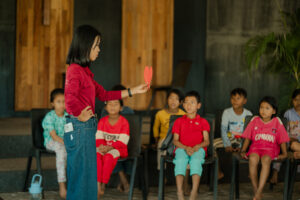
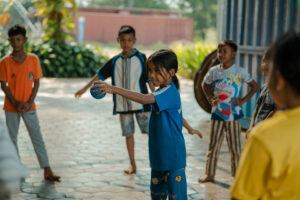
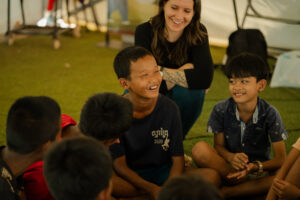
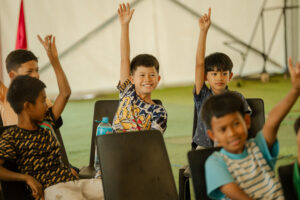
Pre & Primary School (5-12y)
Each Level is 5 Sessions and can be delivered in 60- or 90-minute sessions.
The 90-minute format gives additional time for repetition and practice.
Our pre and primary school programs are designed to build strong, confident, and compassionate children through engaging, age-appropriate experiences. Each course combines play, movement, and guided reflection to develop resilience, self-worth, and positive relationships both in and beyond the classroom.

Level 1 — I, You, We
Resilience starts with how children see themselves.
In I, You, We, children learn to recognise their own value and strengths, understand that mistakes are part of learning, appreciate the value of others and discover how they can contribute positively to a group.
The outcome is a stronger inner foundation: more self-worth, confidence, empathy, courage and belonging.
This gives children the resilience they need before they begin dealing with more difficult social situations.
First, we build resilience from within.
Level 2 — Strong Inside, Safe Together
Once children have built a stronger sense of self, the next step is learning how to stay resilient when relationships become difficult.
Children practise how to remain calm when provoked, understand strong emotions, recognise healthy boundaries and choose responses that protect their wellbeing without unnecessarily escalating the situation.
The outcome is greater emotional regulation, confidence and social resilience. Children become better able to stay secure in themselves, step away from unhealthy situations and understand how their own response can influence what happens next.
Next, we practise resilience with others.
Level 3 — Speak With Kindness, Stand Strong
The final stage is about turning resilience into action.
Children practise how to communicate clearly, solve problems, set and respect boundaries, make safe decisions, ask for help effectively and support others when situations become more challenging.
They apply these skills to real-life situations involving conflict, exclusion, unkind behaviour and bullying situations.
The outcome is children who are better prepared to stay focused, respond confidently, seek support when needed and use their resilience skills more independently.
Finally, children learn to live resilience when it matters most.
Build Resilience → Practise Resilience → Live Resilience
Our Approach to Bullying Prevention
We do not hide behind definitions. We respond early to the real situations children face every day, rather than waiting until harmful behaviour becomes serious enough to receive an official label.
Our approach is holistic. We consider everyone involved:
continue reading…
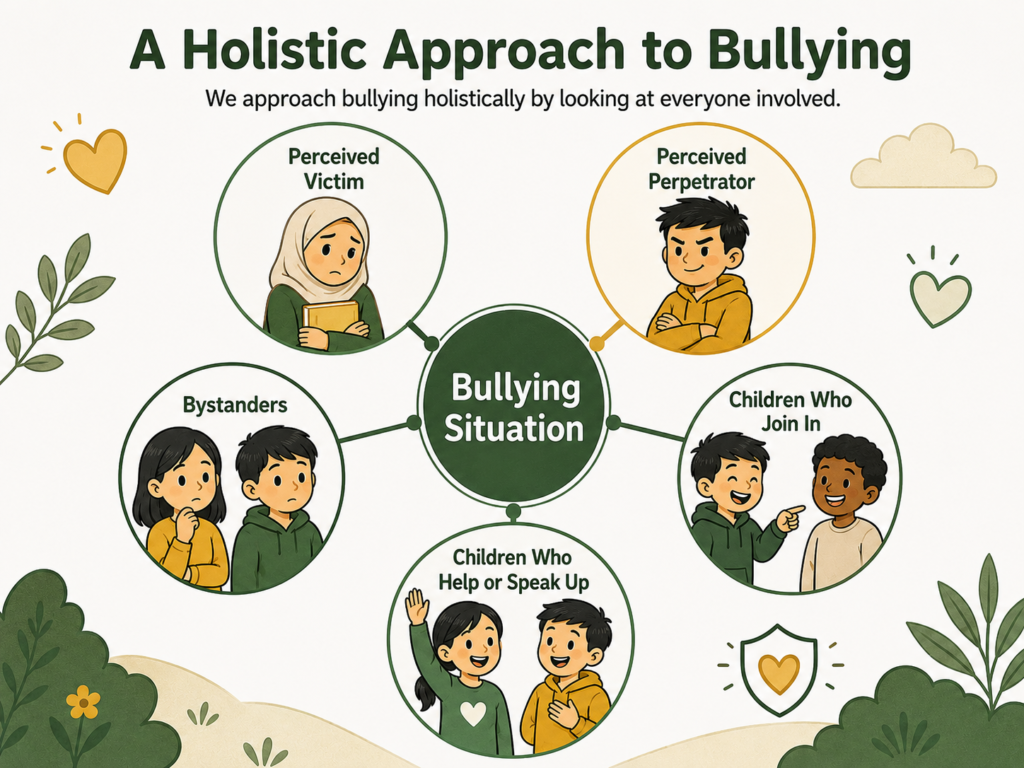
A central part of our approach is developing empathy for the perceived perpetrator. Stress, hurt or insecurity can contribute to harmful behaviour. Understanding this never excuses bullying or removes responsibility from the person causing harm. However, it can help the perceived victim recognise that hurtful words often reflect the other child’s inner struggles rather than the truth about their own worth. This understanding can reduce fear and emotional distress.
We never blame the perceived victim for being too weak or for not responding differently. Instead, we equip children with the inner strength and practical skills to change their own position within a bullying situation, even when the perceived perpetrator does not change.
Children learn how to set healthy boundaries, leave unsafe situations, seek support and respond without giving harmful behaviour the fear, attention or control it may be seeking.
This reflects a resilient mindset. Rather than feeling entirely dependent on other people or external circumstances changing, children learn to ask: “What can I do to improve this situation and protect myself?” This question helps them move from feeling powerless to recognising what they can influence and taking ownership of how they respond.
Our approach is based on an established concept from Germany that has already reached thousands of children. It has been carefully adapted to suit Asian cultures, school environments and the realities children experience within their communities.
Our goal is not to fight hate with more hate. We equip children to respond with courage, empathy, healthy boundaries and love, enabling them to navigate conflict in a positive, confident and resilient way.
What People say

I really found the bully prevention workshop helpful and informative. It raised my awareness of bullying and provided practical strategies to create a safer, more respectful school environment. I would definitely recommend this workshop to others